Table of Contents
- What is Controlled Environment Agriculture (CEA)?
- Why India Needs Controlled Environment Agriculture
- How Controlled Environment Agriculture is Shaping the Future
- Role of Technology in Controlled Environment Agriculture
- Urban Farming and CEA Growth in India
- Consumer Benefits of CEA Farming
- Environmental Impact of Controlled Environment Agriculture
- Economic Opportunities in CEA Farming
- Challenges in Adopting CEA in India
- Why Controlled Environment Farms are the Future
- FAQs
- Conclusion
India’s agriculture sector is at a turning point. With rising population demands, climate change challenges, water scarcity, and declining soil quality, traditional farming methods are struggling to keep up. Farmers and consumers alike are now looking for reliable, sustainable, and high-quality food production systems.
This is where Controlled Environment Agriculture (CEA) emerges as a powerful solution shaping the future of farming in India.
At Nature Harvest Farms, a leading Controlled Environment Farms initiative, the focus is on cultivating vegetables in nutrient-rich soil within carefully controlled conditions – ensuring consistent quality, better yield, and sustainable farming practices.
In this article, we explore how Controlled Environment Agriculture is transforming Indian farming, its benefits, and why it represents the future of agriculture.
What is Controlled Environment Agriculture (CEA)?
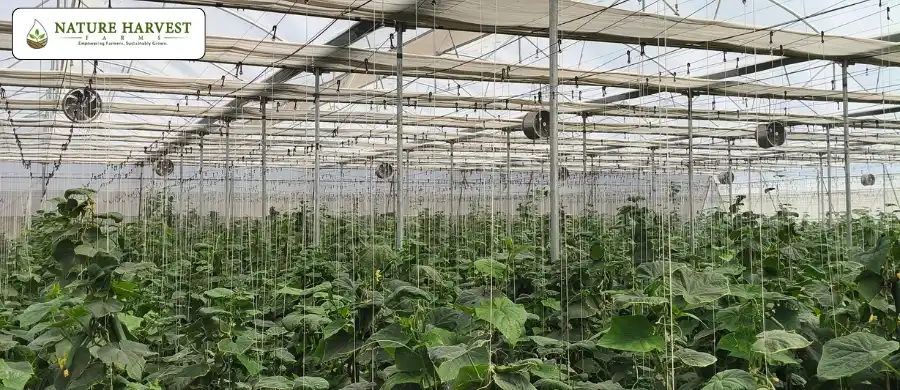
Controlled Environment Agriculture (CEA) refers to a modern farming approach where environmental factors such as temperature, humidity, light, and soil conditions are carefully monitored and controlled to optimize plant growth.
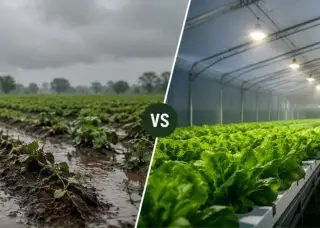
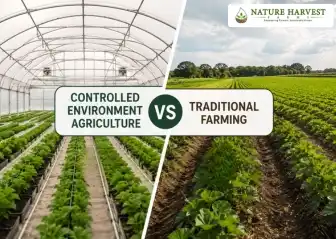
Unlike traditional farming, which depends heavily on weather and external conditions, CEA creates a stable ecosystem for crops, allowing farmers to produce vegetables consistently throughout the year.
Why India Needs Controlled Environment Agriculture
India faces several agricultural challenges that make the adoption of CEA crucial:
1. Climate Change Impact
Unpredictable weather patterns such as droughts, floods, and heatwaves are affecting crop production across the country.
2. Water Scarcity
Agriculture consumes a significant portion of India’s water resources, often inefficiently.
3. Declining Soil Health
Overuse of chemicals and poor farming practices have degraded soil quality in many regions.
4. Increasing Food Demand
India’s growing population demands higher food production with better quality.
5. Supply Chain Inefficiencies
Long transportation times reduce freshness and nutritional value.
CEA addresses all these issues by providing a controlled, efficient, and sustainable farming model.
How Controlled Environment Agriculture is Shaping the Future
1. Climate-Resilient Farming
One of the most significant advantages of CEA is its ability to protect crops from extreme weather conditions.
- Crops are grown in protected environments
- Temperature and humidity are regulated
- External risks are minimized
This ensures that farming continues regardless of climate uncertainties, making agriculture more resilient.
2. Efficient Resource Utilization
Controlled Environment Farms use advanced systems to optimize resource usage:
- Precision irrigation reduces water wastage
- Soil moisture is carefully monitored
- Nutrient application is balanced
This leads to:
- ✔ Lower water consumption
- ✔ Reduced input costs
- ✔ Sustainable farming practices
3. Sustainable Soil-Based Farming
At Nature Harvest Farms, the focus remains on soil-based cultivation within controlled environments, combining traditional farming values with modern technology.
Benefits include:
- Healthy soil management
- Natural nutrient cycles
- Long-term sustainability
4. Higher Yield and Productivity
CEA maximizes crop output by creating optimal growing conditions.
- Plants grow faster and healthier
- Crop cycles are shorter
- Space utilization is efficient
This results in:
- ✔ Increased production per acre
- ✔ Consistent output
- ✔ Reduced crop loss
5. Reduced Pest and Disease Risks
Controlled environments limit exposure to pests and diseases, reducing the need for excessive chemical use.
This ensures:
- ✔ Cleaner produce
- ✔ Lower pesticide usage
- ✔ Safer food for consumers
6. Strengthening Local Food Systems
CEA allows farms to operate closer to urban areas, reducing transportation time and improving supply chain efficiency.
Benefits include:
- Fresher vegetables
- Reduced logistics costs
- Lower carbon footprint
At Nature Harvest Farms, this approach ensures farm-to-table freshness for consumers.
Role of Technology in Controlled Environment Agriculture
Technology is at the heart of CEA. It enables farmers to monitor and manage every aspect of crop growth.
Key technologies include:
- Climate control systems
- Soil monitoring tools
- Automated irrigation systems
- Data-driven farming insights
These innovations ensure:
- ✔ Precision farming
- ✔ Consistent quality
- ✔ Reduced human error
Urban Farming and CEA Growth in India
With increasing urbanization, cities are becoming the new centers for food demand.
Controlled Environment Agriculture supports:
- Urban farming initiatives
- Local food production
- Reduced dependency on rural supply
This is particularly important for:
- ✔ Metro cities
- ✔ High-demand regions
- ✔ Modern retail markets
CEA is making it possible to grow fresh vegetables closer to consumers, ensuring better quality and availability.
Consumer Benefits of CEA Farming
The future of farming isn’t just about farmers – it’s also about consumers.
✔ Better Quality Vegetables
Consistent size, color, and taste.
✔ Higher Nutritional Value
Balanced soil nutrients lead to healthier produce.
✔ Safer Food
Reduced exposure to harmful chemicals.
✔ Freshness Guaranteed
Shorter supply chains ensure fresher vegetables.
Environmental Impact of Controlled Environment Agriculture
CEA contributes significantly to environmental sustainability:
- Reduced water usage
- Lower chemical runoff
- Controlled soil management
- Reduced carbon footprint
This makes it a future-ready farming solution aligned with global sustainability goals.
Economic Opportunities in CEA Farming
Controlled Environment Agriculture is not just a farming method – it’s a growing business opportunity in India.
Key advantages:
- High return on investment
- Consistent production cycles
- Premium pricing for quality produce
For entrepreneurs and farmers, CEA offers:
- ✔ Scalable farming models
- ✔ Reduced risks
- ✔ Better profitability
Challenges in Adopting CEA in India
While CEA has immense potential, there are some challenges:
- High initial setup cost
- Need for technical expertise
- Awareness among farmers
However, with growing awareness and technological advancements, these challenges are gradually being overcome.
Why Controlled Environment Farms are the Future
The future of farming in India depends on efficiency, sustainability, and quality – all of which are delivered by Controlled Environment Agriculture.
At Nature Harvest Farms, the mission is to:
- Deliver fresh, high-quality vegetables
- Promote sustainable soil-based farming
- Support modern agricultural innovation
FAQs
What is the future of farming in India?
Why is Controlled Environment Agriculture important?
Is CEA farming suitable for India?
How does CEA improve crop yield?
Conclusion
India’s agriculture sector is evolving rapidly, and Controlled Environment Agriculture is leading this transformation. With its ability to address climate challenges, improve food quality, and ensure sustainability, CEA is not just an innovation – it’s a necessity.
As more consumers and farmers adopt this approach, the future of farming in India will become more reliable, efficient, and environmentally responsible.
By choosing produce from trusted farms like Nature Harvest Farms, you are supporting a smarter and more sustainable agricultural future.