Table of Contents
- What Is Controlled Environment Agriculture (CEA)?
- Understanding the Concept of Controlled Farming
- Why Agriculture in India Faces Increasing Challenges
- Climate Change and Its Impact on Indian Agriculture
- Growing Food Demand in India
- Water Scarcity and Resource Management
- Land Limitations in Traditional Farming
- How Controlled Environment Agriculture Solves These Challenges
- Technologies Used in CEA Systems
- Types of Controlled Environment Agriculture Systems
- Role of Automation and Smart Farming
- Importance of Environmental Monitoring
- Sustainable Agriculture Practices in CEA
- Water Efficiency in Controlled Farming
- Reduced Pest and Disease Pressure
- Crop Consistency Through Controlled Systems
- Environmental Benefits of CEA
- Future of Controlled Environment Agriculture in India
- FAQs
- Conclusion
India’s agriculture sector has supported millions of livelihoods and fed a rapidly growing population for decades. However, farming today faces increasing challenges such as unpredictable weather patterns, water scarcity, soil degradation, and rising food demand. These challenges have encouraged the adoption of innovative farming methods that provide better control over growing conditions.
One such modern approach is Controlled Environment Agriculture (CEA). This farming system allows crops to be grown inside controlled structures where environmental factors such as temperature, humidity, light, water, and nutrients are carefully managed. By controlling these conditions, plants can grow in a stable and optimized environment regardless of external weather conditions.
Controlled Environment Agriculture is becoming increasingly important in India because it offers a reliable way to produce crops under challenging climatic conditions while improving sustainability and resource efficiency. This article explains why CEA is gaining attention across India and how it is shaping the future of modern agriculture.
What Is Controlled Environment Agriculture (CEA)?
Controlled Environment Agriculture (CEA) refers to a farming method where crops are grown inside structures that allow precise control of environmental conditions. These systems regulate temperature, humidity, light intensity, irrigation, and nutrients to create ideal conditions for plant growth.
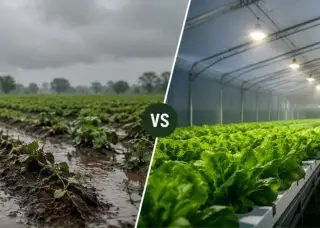
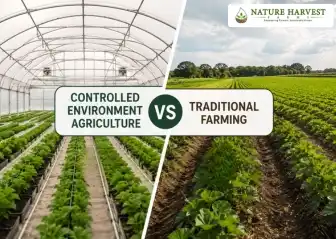
Unlike traditional open-field farming, CEA protects crops from unpredictable weather conditions such as heavy rainfall, extreme heat, strong winds, or cold waves.
CEA systems may include:
- Polyhouses
- Greenhouses
- Indoor farms
- Vertical farming systems
- Hydroponic systems
These systems create a stable growing environment that supports healthy plant development.
Understanding the Concept of Controlled Farming
Controlled farming focuses on managing the plant’s growing environment rather than depending entirely on natural conditions. By controlling factors such as temperature, humidity, and irrigation, plants receive exactly what they need for healthy growth.
Key elements of controlled farming include:
- Environmental monitoring
- Precise irrigation systems
- Nutrient management
- Light regulation
- Climate control systems
This scientific approach allows crops to grow in carefully maintained conditions.
Why Agriculture in India Faces Increasing Challenges
India’s agriculture sector is experiencing multiple challenges that make traditional farming more difficult than before.
Some major challenges include:
- Unpredictable weather patterns
- Water scarcity
- Soil fertility decline
- Increasing temperatures
- Extreme weather events
- Urban expansion reducing farmland
These challenges highlight the need for modern agricultural solutions that can stabilize crop production.
Climate Change and Its Impact on Indian Agriculture
Climate change has become one of the most significant factors affecting farming across India.
Farmers now face:
- Irregular rainfall patterns
- Extended heat waves
- Unexpected storms
- Changing growing seasons
These climatic variations make it difficult for crops to grow consistently in open fields.
Controlled Environment Agriculture addresses these challenges by allowing farmers to create stable internal growing conditions independent of external weather changes.
Growing Food Demand in India
India’s population continues to grow rapidly, increasing the demand for food production. Urbanization and changing dietary habits have also increased the demand for fresh vegetables, herbs, and specialty crops.
Meeting this demand requires farming methods that can produce crops efficiently and consistently throughout the year. Controlled Environment Agriculture helps support this demand by providing reliable cultivation systems.
Water Scarcity and Resource Management
Water scarcity is becoming a critical concern in many parts of India. Traditional irrigation methods often involve significant water loss through evaporation, runoff, and inefficient distribution.
CEA systems address this issue by using advanced irrigation technologies such as:
- Drip irrigation
- Nutrient film techniques
- Recirculating hydroponic systems
These methods help ensure that water is used efficiently while minimizing wastage.
Land Limitations in Traditional Farming
India faces increasing pressure on agricultural land due to urban development and infrastructure expansion. As cities grow, the availability of farmland continues to decline.
Controlled Environment Agriculture helps address this challenge by enabling crops to be grown in compact spaces through methods such as vertical farming and indoor cultivation.
How Controlled Environment Agriculture Solves These Challenges
CEA systems offer several solutions to modern agricultural challenges.
They help by:
- Protecting crops from extreme weather
- Maintaining stable environmental conditions
- Improving water efficiency
- Supporting year-round cultivation
- Reducing pest exposure
By managing environmental variables, farmers can ensure consistent plant development regardless of external climate fluctuations.
Technologies Used in CEA Systems
Modern Controlled Environment Agriculture relies on several technologies that support precision farming.
Key technologies include:
- Environmental sensors
- Climate control systems
- Smart irrigation systems
- Automated fertigation systems
- Artificial lighting systems
- Monitoring software
These technologies help maintain optimal growing conditions throughout the crop cycle.
Types of Controlled Environment Agriculture Systems
CEA systems can be implemented using different structures and technologies depending on climate, crop requirements, and space availability.
Common types include:
- Greenhouses
- Polyhouses
- Hydroponic systems
- Vertical farming systems
- Indoor farming facilities
Each system provides a different level of environmental control.
Greenhouses in India
Greenhouses are structures covered with transparent materials that allow sunlight to enter while protecting plants from harsh weather conditions.
They are widely used for cultivating vegetables, flowers, and specialty crops in controlled environments.
Greenhouses may include:
- Natural ventilation systems
- Climate control equipment
- Irrigation automation
Polyhouse Farming
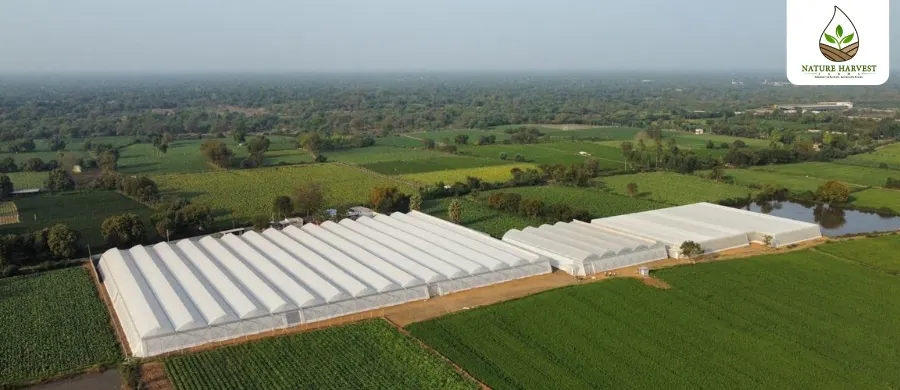
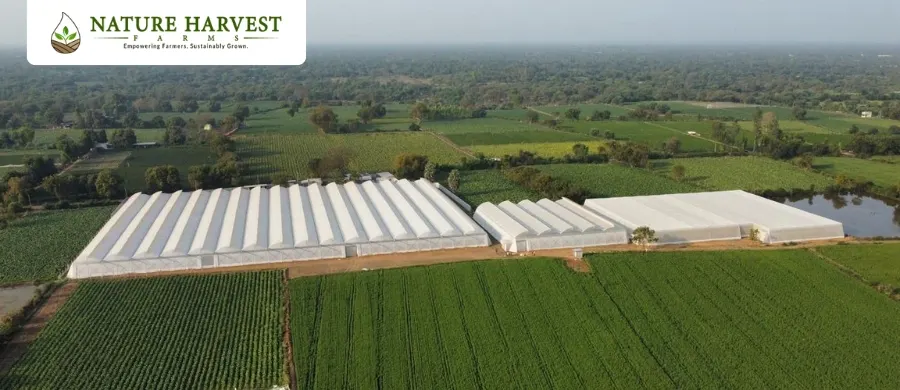
Polyhouses are similar to greenhouses but use polyethylene film as a covering material. These structures help regulate temperature and humidity while allowing sunlight to reach plants.
Polyhouses are commonly used for protected cultivation in many parts of India.
Hydroponic Systems
Hydroponics is a soil-less cultivation method where plants grow in nutrient-rich water solutions.
This system allows precise control over nutrient delivery and water management.
Hydroponics is increasingly used in controlled farming systems because it allows efficient plant growth in limited spaces.
Vertical Farming Systems
Vertical farming involves growing crops in stacked layers inside controlled environments. This method allows crops to be cultivated in urban areas where land availability is limited.
Vertical farms often use artificial lighting and hydroponic systems to maintain plant growth.
Climate Control Technologies in CEA
Climate control technologies help maintain optimal growing conditions inside CEA structures.
These systems include:
- Cooling systems
- Heating systems
- Ventilation systems
- Humidity control equipment
Together, these technologies help stabilize the internal environment.
Role of Automation and Smart Farming
Automation plays an important role in modern CEA systems. Automated systems help regulate irrigation, nutrient delivery, and climate control without constant manual intervention.
Smart farming technologies can also collect real-time environmental data, helping farmers monitor plant conditions accurately.
Importance of Environmental Monitoring
Environmental monitoring ensures that plants receive the right conditions for healthy growth.
Key parameters monitored in CEA systems include:
- Temperature
- Humidity
- Light intensity
- Soil or nutrient solution pH
- Electrical conductivity (EC)
Monitoring these factors helps maintain stable growing conditions.
Sustainable Agriculture Practices in CEA
Controlled Environment Agriculture supports sustainable farming practices by reducing resource waste and improving efficiency.
Some sustainability benefits include:
- Efficient water usage
- Reduced pesticide exposure
- Improved nutrient management
- Reduced soil degradation
Water Efficiency in Controlled Farming
Water efficiency is one of the most important advantages of CEA systems.
Advanced irrigation methods allow water to be delivered directly to plant roots, minimizing evaporation and runoff.
Many hydroponic systems also recycle water, further improving water conservation.
Reduced Pest and Disease Pressure
CEA structures provide physical protection against many pests and insects. Insect-proof nets, controlled entry points, and environmental monitoring help reduce the risk of infestations.
This controlled environment supports healthier crop growth with fewer pest-related challenges.
Urban Agriculture and CEA
Controlled Environment Agriculture is also supporting the growth of urban farming initiatives. Cities can integrate indoor farming systems, rooftop greenhouses, and vertical farms to produce fresh food closer to urban populations.
Urban agriculture reduces transportation distances and supports localized food production.
Crop Consistency Through Controlled Systems
One of the key advantages of controlled farming is consistency. When environmental factors are regulated, crops can grow under stable conditions throughout the year.
This stability helps maintain plant health and predictable growth cycles.
Environmental Benefits of CEA
Controlled Environment Agriculture offers several environmental benefits.
These include:
- Efficient water use
- Reduced pesticide exposure
- Optimized nutrient usage
- Lower environmental impact
These factors contribute to sustainable agricultural practices.
Future of Controlled Environment Agriculture in India
As technology continues to evolve, Controlled Environment Agriculture is expected to play a larger role in India’s agricultural landscape.
Advancements in automation, artificial intelligence, and environmental monitoring systems are making controlled farming more precise and efficient.
These innovations will continue to improve how crops are grown in controlled environments.
FAQs
What is Controlled Environment Agriculture?
Why is Controlled Environment Agriculture important?
What crops can be grown in CEA systems?
How does CEA help conserve water?
Is CEA suitable for urban farming?
Conclusion
Controlled Environment Agriculture is becoming increasingly important in India as farmers and agricultural innovators seek solutions to climate challenges, water scarcity, and growing food demand. By creating carefully managed growing environments, CEA systems allow crops to develop under stable and optimized conditions throughout the year.
As technology continues to advance, Controlled Environment Agriculture is expected to play a vital role in shaping the future of sustainable and resilient farming systems in India. Through improved environmental control, efficient resource use, and advanced cultivation methods, CEA offers a promising pathway toward modern agricultural practices that support long-term food security and environmental sustainability.
Learn More About Modern Farming Technologies.
Interested in understanding how modern agricultural technologies are shaping the future of crop cultivation? Explore more guides on protected cultivation, hydroponics, polyhouse systems, and controlled environment agriculture to deepen your knowledge.